

As a core public knowledge repository on the internet, Baidu Baike has always adhered to the fundamental principles of “objectivity, authority, and verifiability” in entry creation. In 2026, the platform further optimized its review mechanism, with clearer and stricter requirements regarding content authenticity, reference authority, and account qualifications. This article breaks down the latest creation logic from five dimensions—creation prerequisites, pre-preparation, practical workflow, common pitfalls, and post-publication maintenance—to help you pass the review process efficiently.
I. Creation Prerequisites: First Clarify “Who Can Create” and “What Can Be Created”
Baidu Baike is not a “mass-participation creation platform,” but rather focuses on topics of public interest and imposes basic qualification requirements on creators. This is the key prerequisite to avoid wasted effort at the outset.
- Creator Qualifications: Accounts Must Be “Leveled Up” to Standard
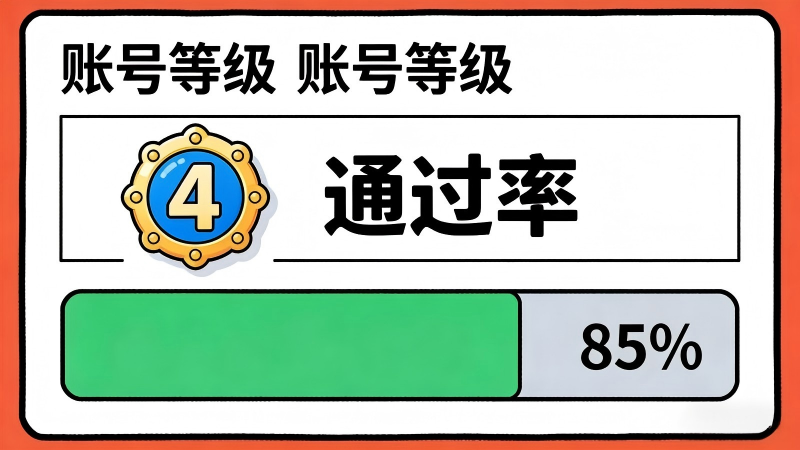
In 2026, the platform continues to enforce a dual threshold of “level + approval rate”: only users with an account level ≥ 4 and an edit approval rate ≥ 85% can unlock the entry creation function. Newly registered accounts must first accumulate credibility through “assisted editing”: prioritize simple public entries (such as local snacks, historical events, or classic works), and perform basic actions like correcting typos or supplementing public information (e.g., adding official certification details for time-honored brands).
Note: It is strictly prohibited to “farm levels” through improper methods such as randomly altering content or fabricating references. Once detected, the account will be banned and cannot operate again for six months. It is recommended to normally edit 10–15 high-quality entries to quickly meet the requirements.
- Entry Topic Qualifications: Must Have “Public Attention”
The core positioning of Baidu Baike is an “archive,” not a “social feed” or an “advertising board.” It only includes topics supported by clear, publicly available evidence. Eligible topics mainly fall into four categories:
- People: Public figures (actors, scholars, entrepreneurs, etc.) must have authoritative media coverage or officially published core achievements (such as published papers, major awards, etc.). Ordinary office workers or students without public attention cannot pass review.
- Enterprises/Organizations: Companies that have completed industrial and commercial registration with publicly synchronized information, or formally registered institutions. Verifiable information such as establishment date, registered capital, and main business must be provided. Newly registered companies (e.g., only 3 days old) do not yet meet creation conditions.
- Products: Products that have been officially launched must have evaluations or reports from at least three authoritative media outlets. Concept products or planned projects that have not yet launched cannot pass review.
- Events: Events with broad social impact that have been extensively reported by mainstream media (such as major social activities or industry policy releases). Private trivial matters or niche gossip without public value will not be included.
II. Pre-Preparation: Three Things That Determine Approval Rate—None Can Be Missing
Preparation before creation directly affects the review outcome. The core is to solve three major issues: “account eligibility, authoritative materials, and accurate naming”—also the most easily overlooked aspects for beginners.
- Authoritative References: Accumulate Enough “Hard Evidence” in Advance
The core rule of Baidu Baike is “content quality depends entirely on the strength of the evidence.” All key information must be supported by authoritative third-party sources—this is the central review threshold. In 2026, the platform recognizes references in the following priority order:
Tier 1 (Exempt from inspection): Central media (People’s Daily Online, Xinhua Net, Guangming Net), provincial Party newspapers (e.g., Guangdong Daily), authoritative industry journals (e.g., China Medical Herald); government official websites (.gov.cn domains), listed company announcements, and official industrial and commercial information disclosure platforms.
Tier 2 (Supplementary): News channels of widely influential portal websites (e.g., Sina News, Tencent News), and information released by authoritative industry associations. Note: These materials must be used in combination with Tier 1 sources; using them alone may not be accepted.
Prohibited sources (automatic rejection): Corporate websites, WeChat official accounts, Weibo, Douyin, and other self-media content (even from major influencers, unless it is an official self-media account such as “CCTV News”); forums, Tieba, Xiaohongshu, and other user-generated content platforms; advertorials, promotional copy, unverified online articles; dead links or links whose content does not match.
Preparation tip: If central media coverage cannot be found, use a “region + industry” combination strategy. For example, a technology company in Hangzhou can combine coverage from Hangzhou Daily (provincial Party newspaper) and Science and Technology Daily (authoritative industry outlet) to provide dual verification and enhance credibility.
- Entry Name: Precisely Lock in the “Official Name”—Search Before Creating
The entry name is the unique identifier. A single incorrect character may result in wasted effort. Follow two core principles:
- Use the official full name: Enterprises should use the complete registered business name (e.g., “Shenzhen XX Technology Co., Ltd.” instead of the abbreviation “XX Technology”); individuals should use the standard name on their ID (e.g., “Stephen Chow” rather than “Sing Yeh”); products should use the officially released standard name, avoiding colloquial or nickname usage.
- Search before creating: Before creation, 반드시 search the intended name in Baidu Baike to confirm whether an entry already exists. If there are multiple entries with the same name (e.g., “Zhang Wei” may refer to multiple individuals), add a qualifier to distinguish them (e.g., “Zhang Wei (Professor at Beijing Normal University)”). If an exact match already exists, you should edit and supplement it rather than creating a duplicate entry.
- Content Outline: Organize “Core Information” According to Templates
Plan the content structure in advance to avoid logical confusion during writing. It is recommended to directly reference Baidu Baike’s official templates and organize core information by category:
- People entries: Core information includes date of birth, professional identity, three key achievements (such as awards, major works, or significant contributions), and social activities. Childhood anecdotes or personal hobbies without authoritative evidence should be removed.
- Enterprise entries: Core information includes establishment date, registered capital, headquarters location, main business, and three important honors or milestone events. Sections such as “corporate culture” or “employee highlights” are not recommended unless supported by dedicated media reports.
- Product entries: Core information includes launch date, manufacturer, core functions, and authoritative evaluation conclusions. Avoid subjective descriptions such as “high cost-performance” or “users’ favorite.”
III. Practical Workflow: Three Precise Steps—Follow Templates to Avoid Detours
After completing pre-preparation, you can enter the formal creation process. In 2026, the platform optimized the editing interface, making core operations more streamlined. The key is to follow the principles of “choosing the right template, writing objectively, and citing accurately.”
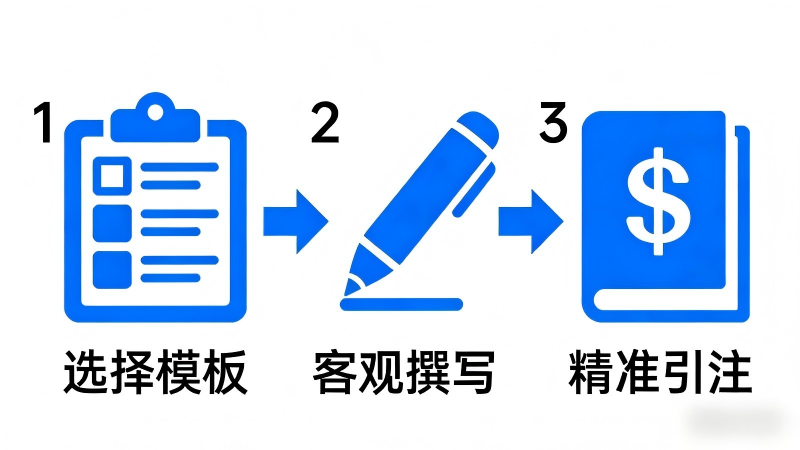
Step 1: Find the Right Entry Point and Choose the Appropriate Template
After logging in with a qualified account, open the Baidu Baike official website and click “Create Entry” in the upper right corner. Beginners should avoid choosing “Blank Creation.” Instead, directly select the official template corresponding to the category: choose the “Person” template for individuals (with subcategories such as “Entertainment Figures” or “Scholars”), the “Enterprise” template for companies, and the “Product” template for products. Templates include standardized modules (such as the “Industrial and Commercial Information” module in enterprise templates), which effectively prevent omissions and improve review efficiency.
Step 2: Write Content and Strictly Observe the “Three Don’ts” Rule
The core of content writing is “objective, concise, and verifiable.” Subjective or promotional expressions are strictly prohibited. Specifically, adhere to the “three don’ts”:
- Don’t write subjective evaluations: Prohibit the use of words such as “famous,” “top-tier,” “industry-leading,” or “best value.” Even if factual, absolute expressions like “first,” “only,” or “most” are not allowed; replace them with data (e.g., “35% market share in 2025”).
- Don’t write future plans: Content such as “to be listed next year,” “aiming to become an industry leader in three years,” or “new products coming soon” must be removed. Baidu Baike only records facts that have already occurred.
- Don’t write advertising information: Do not add contact details (phone numbers, emails, addresses), promotional information, recruitment notices, or links that guide users to official websites. Corporate websites may only serve as supplementary reference sources and cannot be written directly into the entry content.
Correct examples: “XX Company achieved revenue of RMB 210 million in 2025, a year-on-year increase of 28% (Reference: XX Finance, January 2026 report).” “Li XX published the paper ‘XX Research’ in 2024, which was indexed by an SCI journal (Reference: CNKI public disclosure page).”
Citation tips: Add a reference every 2–3 sentences. Select the text that needs verification, click “Add Reference,” and paste an authoritative link. Ensure the linked content directly corresponds to the text (e.g., if stating “won XX award,” the link must clearly show “XX company/person won XX award”).
Step 3: Preview and Submit, with a Clear Edit Summary
After writing, be sure to click “Preview” to check three core issues: whether the content is objective and non-advertising, whether the formatting is clear, and whether every key piece of information has a reference. After confirmation, fill in the “Edit Summary” (e.g., “Created XX enterprise entry, supplemented establishment information and core business, all content supported by authoritative media reports”), then click “Submit.”
Note: If you are a related party to the entry topic (e.g., a company employee or the individual themselves), it is recommended to declare the conflict of interest in the edit summary or invite a neutral third party to assist in creation to avoid rejection due to perceived subjectivity.
IV. Review and Pitfall Avoidance: How to Revise After Rejection—and Red Lines You Must Not Cross
After submission, review results are usually returned within 1–3 working days. In 2026, the platform provides more precise feedback. Beginners should revise accordingly. At the same time, certain red lines must never be crossed, or account bans may result.
- Common Rejection Reasons and Correction Solutions
- “References are not authoritative”: The most common reason. Solution: Replace self-media or corporate website sources with authoritative ones such as People’s Daily Online or government websites. If references are insufficient, add 2–3 provincial Party newspaper or authoritative industry reports before resubmitting.
- “Content contains advertising”: Remove subjective words such as “leading” or “high-quality,” contact details, and promotional information. Rewrite promotional statements into objective facts (e.g., change “our product is loved by users” to “the product sold 100,000 units in 2025,” with authoritative sales data sources).
- “Insufficient public attention”: Common for new companies or niche individuals. Solution: Pause creation and first gain 3–5 authoritative media reports through industry exhibitions, public welfare activities, etc., then try again once sufficient attention is accumulated.
- “Information duplication or conflict”: Overlap with existing entries. Solution: Merge similar information (e.g., merge “awarded in 2023” and “awarded in 2024” into “received XX and XX awards consecutively from 2023 to 2024”). For same-name entries, add qualifiers to distinguish identities.
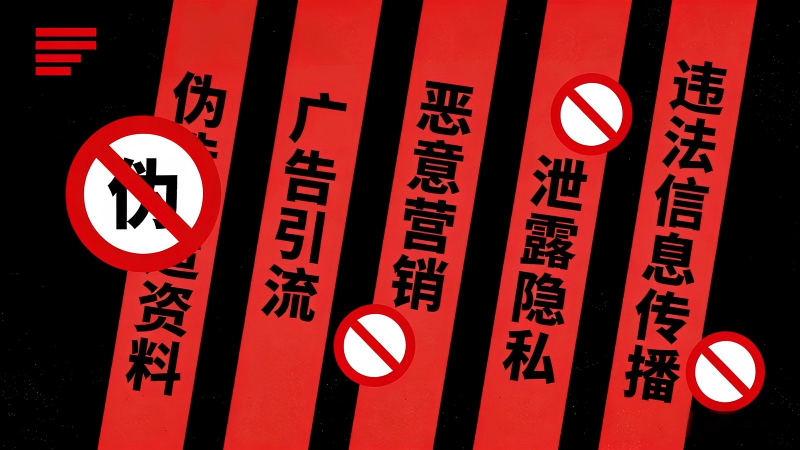
- Five Absolute Red Lines You Must Not Cross in 2026
- Malicious editing for traffic diversion: Forcibly inserting your own brand into major industry entries (e.g., “Refrigerator”), replacing product images, or disparaging competitors. Such actions will result in immediate account bans.
- Fabricating references: Photoshopping media report screenshots or altering official disclosures. The platform has dedicated authenticity verification mechanisms; once discovered, editing privileges will be permanently revoked.
- Frequent blind submissions: Repeatedly resubmitting the same content without correction after multiple rejections. This triggers platform risk control and stricter review, significantly extending future modification timelines.
- Content plagiarism: Directly copying and pasting media reports or content from other platforms. You must summarize and rewrite in your own words. Quoted sections must be placed in quotation marks and properly cited, or they will be deemed infringing.
- Over-packaging individuals: Writing personal entries like autobiographies, adding large amounts of unsubstantiated childhood anecdotes or personal reflections. Keep it concise and objective: “professional identity + core achievements + social activities.”
V. Post-Publication Maintenance: Entry Launch Is Not the End, but the Beginning
After an entry goes live, regular maintenance is required to ensure accuracy and authority, and to prevent malicious edits or misinformation. In 2026, the platform introduced the “Baike Sentinel” feature, providing greater convenience for maintenance.
- Regular checks: Spend 10 minutes each month searching for the entry to check for errors, advertisements, or malicious changes. Pay special attention to whether core data (such as company revenue or personal positions) is outdated.
- Enable alerts: Click “Follow” on the entry page to activate “Baike Sentinel” SMS alerts. You will be notified immediately of any edits, enabling timely response.
- Timely updates: When major new information arises (e.g., a company receives a major award or an individual’s position changes), update the entry after adding authoritative references. Continue to follow the principles of objectivity and verifiability, without subjective commentary.
- Appeals and rights protection: If the entry is maliciously edited or contains false negative information, submit an appeal immediately with correct materials and authoritative sources, explaining the reason for revision. The platform usually reviews and restores within 24 hours.
Conclusion: The Core of Creation in 2026—Be a “Carrier of Evidence,” Not a “Content Creator”
At its core, creating a Baidu Baike entry is an “evidence game.” It does not require excellent writing skills, only the ability to present rock-solid authoritative evidence and convey facts in an objective, concise manner. For beginners, rather than rushing to write content, it is better to spend time improving account credibility, accumulating authoritative materials, and fully understanding platform rules. Remember: slow preparation, precise writing, and strict compliance are the core logic of Baidu Baike creation in 2026. If multiple attempts still fail, reassess the topic’s level of public attention and the authority of the materials, rather than trusting so-called “guaranteed approval” creation services—the essence of a high-quality entry is always real and evidence.